Machine learning in healthcare prediction has quickly become one of the most talked-about applications of artificial intelligence in medicine. From forecasting disease risk to predicting hospital readmissions, hospitals and researchers are turning to data-driven models to make faster, more accurate decisions. But with so many machine learning approaches available, which one actually powers most healthcare prediction systems today?
In this guide, we’ll break down the core types of machine learning, explain why one approach dominates clinical prediction tasks, and explore real examples of how it’s used in hospitals and research labs worldwide.
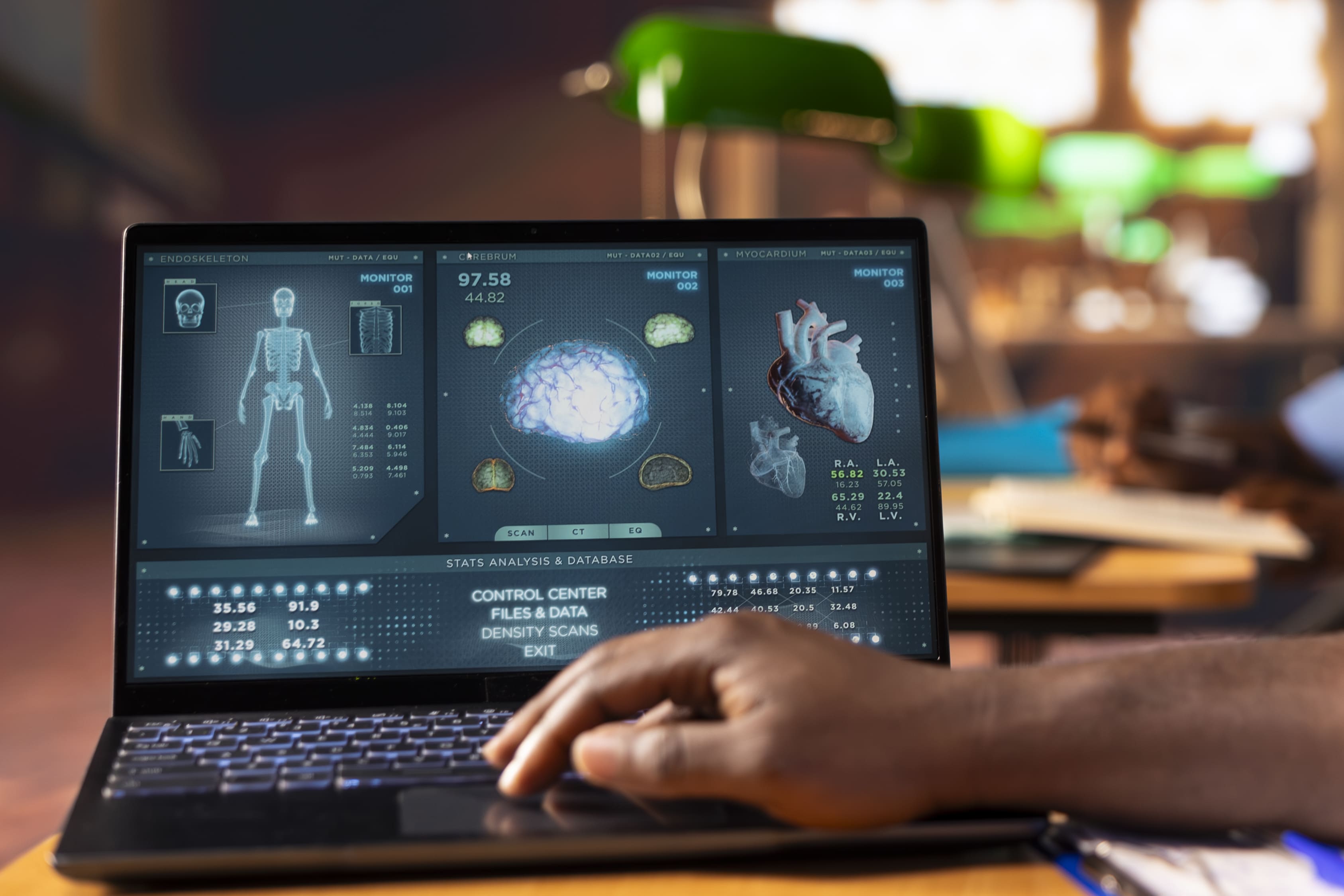
What Is Machine Learning in Healthcare Prediction?
Machine learning in healthcare prediction refers to the use of algorithms that learn patterns from historical patient data — such as lab results, vital signs, imaging, and medical history — to forecast future health outcomes. These predictions might include the likelihood of a disease, the risk of complications after surgery, or how a patient will respond to a particular treatment.
Unlike traditional statistical models, machine learning systems improve as they’re exposed to more data, making them especially valuable in a field like medicine where new patient information is constantly generated.
Types of Machine Learning Used in Healthcare
Before answering which approach is most common, it helps to understand the main categories of machine learning used across the healthcare industry.
Supervised Learning
Supervised learning uses labeled datasets, meaning each data point is paired with a known outcome. For example, a dataset might include thousands of patient records labeled as “diabetic” or “non-diabetic.” The algorithm learns the relationship between input features (age, weight, blood sugar levels) and the labeled outcome, then applies that knowledge to predict outcomes for new patients.
Unsupervised Learning
Unsupervised learning works with unlabeled data, looking for hidden patterns or groupings. In healthcare, this is often used to cluster patients with similar symptoms or to detect unusual patterns that might indicate a rare condition.
Reinforcement Learning
Reinforcement learning trains an algorithm through trial and error, rewarding it for actions that lead to positive outcomes. This is less common in day-to-day clinical prediction but is gaining traction in areas like personalized treatment planning and robotic-assisted surgery.
Deep Learning
Deep learning, a subset of machine learning that uses multi-layered neural networks, excels at analyzing complex data such as medical images, MRI scans, and genomic sequences. It’s often used alongside supervised learning to power advanced diagnostic tools.
Why Supervised Learning Dominates Healthcare Prediction
Among all these approaches, supervised learning is the type of machine learning most commonly used in healthcare prediction. There are a few clear reasons for this:
- Labeled clinical data is widely available. Electronic health records already contain diagnoses, lab results, and outcomes, making it easier to train supervised models.
- Predictive accuracy is measurable. Since supervised models are trained against known outcomes, their performance can be validated against real patient results before deployment.
- Regulatory and clinical trust. Healthcare providers need explainable, testable predictions, and supervised models — especially algorithms like logistic regression and decision trees — are easier to interpret than many unsupervised or reinforcement-based systems.
- Strong track record. Supervised learning has been used successfully in disease risk scoring, readmission prediction, and diagnostic support for over a decade, giving it a proven foundation that hospitals trust.
According to research published by the <a href=”https://www.ncbi.nlm.nih.gov/pmc/” target=”_blank” rel=”nofollow noopener”>National Center for Biotechnology Information</a>, supervised learning models consistently outperform unsupervised approaches in structured clinical prediction tasks such as mortality risk and readmission forecasting, largely because of the availability of well-labeled outcome data.
Real-World Applications of Machine Learning in Healthcare Prediction
Machine learning in healthcare prediction is already embedded in many clinical workflows:
- Disease risk prediction: Models estimate a patient’s likelihood of developing conditions like diabetes, heart disease, or certain cancers based on lifestyle and clinical data.
- Hospital readmission forecasting: Supervised models flag patients at high risk of returning to the hospital within 30 days, allowing care teams to intervene early.
- Sepsis and deterioration alerts: Predictive algorithms monitor vital signs in real time to warn clinicians before a patient’s condition worsens.
- Treatment response prediction: Machine learning helps forecast how a patient might respond to a specific drug or therapy, supporting more personalized care.
- Medical imaging analysis: Deep learning models, often trained using supervised techniques, detect tumors, fractures, and abnormalities in X-rays, CT scans, and MRIs.
The <a href=”https://www.who.int/health-topics/digital-health” target=”_blank” rel=”nofollow noopener”>World Health Organization</a> has highlighted predictive analytics as a key pillar of digital health transformation, noting its growing role in early diagnosis and resource planning across health systems.
Popular Algorithms Used in Clinical Prediction
Several supervised learning algorithms are especially popular for healthcare prediction tasks:
- Logistic Regression – widely used for binary outcomes like disease presence or absence, valued for its interpretability.
- Random Forests – handle complex, non-linear relationships in patient data while remaining relatively easy to explain.
- Gradient Boosting Machines (e.g., XGBoost) – frequently used in readmission and mortality prediction models due to high accuracy.
- Support Vector Machines (SVM) – effective for classification tasks involving smaller, high-dimensional datasets.
- Neural Networks – used when patterns are too complex for simpler models, particularly in imaging and genomic prediction.
Choosing the right algorithm often depends on the size of the dataset, the need for interpretability, and the specific clinical question being answered.
Benefits and Challenges
Benefits
- Earlier detection of disease and complications
- More personalized treatment recommendations
- Reduced hospital readmission rates
- Better allocation of clinical resources
- Support for clinicians in high-pressure decision-making
Challenges
- Data quality issues: Incomplete or biased datasets can reduce model accuracy.
- Interpretability concerns: More complex models like deep neural networks can be difficult for clinicians to fully understand or trust.
- Privacy and security: Patient data must be handled carefully to comply with regulations such as HIPAA.
- Generalizability: A model trained on one hospital’s population may not perform as well elsewhere without careful validation.
For a deeper look at how predictive models are validated in clinical settings, check out our related article on AI-driven diagnostic tools in modern medicine.
The Future of Machine Learning in Healthcare Prediction
As more health systems adopt electronic records and wearable health data becomes mainstream, machine learning in healthcare prediction is expected to grow even more sophisticated. Hybrid models that combine supervised learning with deep learning are increasingly used to process both structured data (like lab results) and unstructured data (like imaging or clinical notes) together.
Researchers are also working to improve model explainability, ensuring that as predictions become more accurate, they remain transparent and trustworthy for both clinicians and patients. Regulatory bodies such as the <a href=”https://www.fda.gov/medical-devices/software-medical-device-samd/artificial-intelligence-and-machine-learning-aiml-enabled-medical-devices” target=”_blank” rel=”nofollow noopener”>U.S. Food and Drug Administration</a> continue to update guidance for AI-enabled medical devices, reflecting how central these technologies are becoming to modern care.
Conclusion
When it comes to healthcare prediction, supervised learning remains the most commonly used type of machine learning, and for good reason. It offers a level of reliability, interpretability, and clinical validation that few other approaches can match. Because hospitals already generate vast amounts of labeled data through electronic health records, lab results, and diagnostic codes, supervised models have a natural advantage: they can be trained, tested, and trusted using outcomes clinicians already understand.
Machine learning in healthcare prediction is no longer a futuristic concept — it’s actively shaping how providers detect disease earlier, forecast hospital readmissions, and personalize treatment plans. From logistic regression models flagging diabetes risk to gradient boosting algorithms predicting 30-day readmissions, these tools are helping care teams shift from reactive treatment to proactive prevention.
That said, the technology isn’t without challenges. Data quality, model interpretability, and patient privacy remain ongoing concerns that researchers and regulators continue to address. As hybrid models combining supervised and deep learning techniques mature, and as explainability improves, machine learning in healthcare prediction is poised to become even more accurate and trustworthy.
Ultimately, the future of medicine will likely be defined by how well clinicians and algorithms learn to work together — with supervised learning leading the way.
Want me to update the file with this version, or keep both as options?